
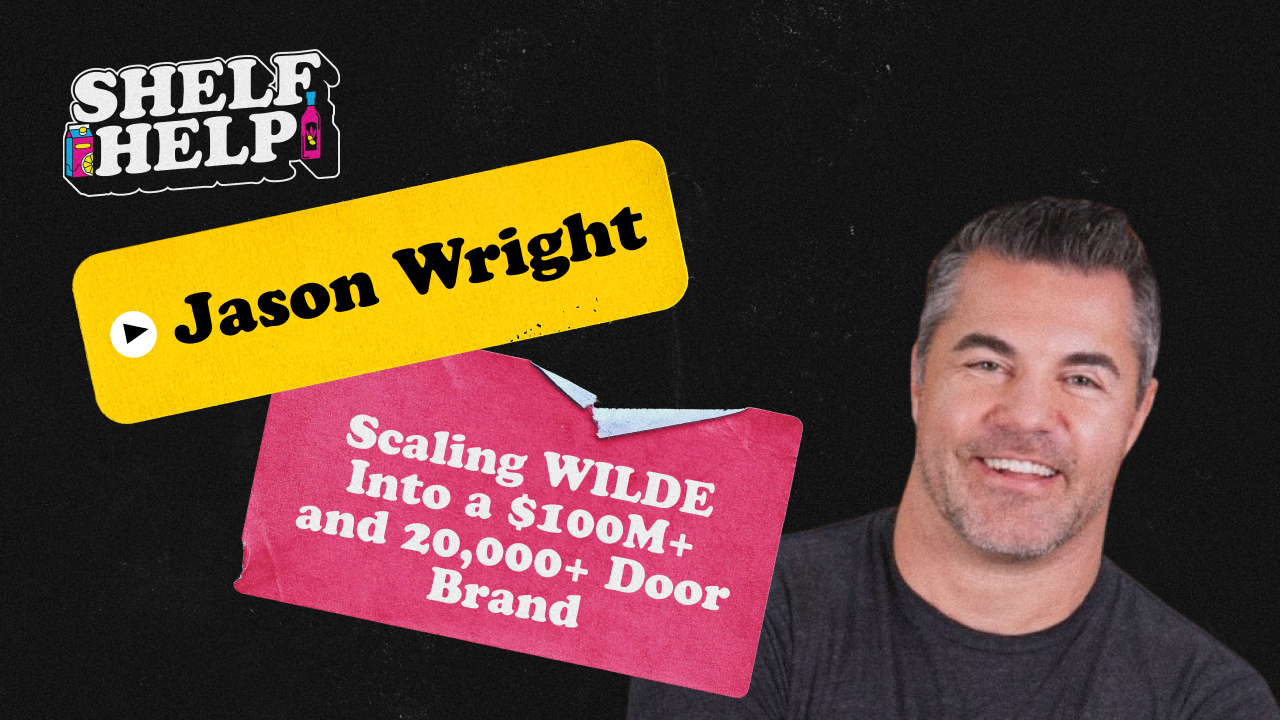
Jason Wright - Scaling WILDE Into a $100M+ and 20,000+ Door Brand



.svg)

On this episode, we're joined by Jason Wright, Founder and CEO of WILDE Protein Snacks - the brand that figured out how to turn chicken breast into a thin, crispy chip (and now crackers!) and has since grown into a $100M+ business across 20,000+ retail doors.
Jason walks through the full journey - from a failed meat-based protein bar to the eureka moment at the bottom of a potato chip bag, through R&D at Colorado State's meat science lab, a disastrous test run at a pork rind facility, and the moment that inspired WILDE's now-patented production equipment.
We get into why WILDE had no choice but to vertically integrate and what it took to build a 55,000 sq ft facility in Kentucky during COVID - WILDE is now opening a 130,000 sq ft plant.
Jason also breaks down pricing strategy, why demos remain the top velocity driver, and how TikTok creators are scaling a "disbelief" marketing message.
We also dig into WILDE's innovation pipeline - the hard lesson from discontinuing a pork chip, and why the brand is now focused on formats. Crackers just hit the shelf, a tortilla chip is coming later this year, and a pita chip is on the horizon.
---------------
Episode Highlights:
🥣 From granola founder in NYC to chicken chip inventor
🧪 R&D at Colorado State's JBS-built meat science lab
🏭 The pork rind facility disaster and what came next
🔧 A bulldozer-inspired idea that led to patented equipment
⚠️ IP leakage at a co-man (Conagra, Tyson, Hershey)
🏗️ Building a 55K sq ft facility during COVID - and now a 130K sq ft plant
🎨 Naming the brand after Oscar Wilde (and the trademark fight)
🛒 How Whole Foods pioneered the protein snack set
🚀 Demos as the #1 velocity driver (and scaling TikTok creators)
💡 The "I Can't Believe It's Not Butter" marketing philosophy
🧀 Launching the WILDE cracker (chicken breast + four cheeses)
🎯 Why WILDE is now focused on formats, not proteins
👀 Innovation roadmap: tortilla chips, pita chips, flat pretzels
---------------
Table of Contents:
00:00 – Intro
01:00 – Origin story: Feed Granola and health food in NYC
03:17 – The failed meat-based protein bar
06:57 – R&D at Colorado State's meat science lab
08:03 – The pork rind facility disaster
09:30 – The bulldozer moment and patented equipment
11:00 – Why WILDE had to vertically integrate
12:01 – Co-man in Virginia and IP leakage risks
14:00 – Why Kentucky and how they financed the build
18:11 – Brand identity and "protein chips" framing
20:07 – Naming the brand after Oscar Wilde
22:17 – Pricing strategy and retail expansion
24:05 – Landing at Whole Foods and the protein snack set
26:27 – Driving velocity: demos, TikTok, and disbelief marketing
29:25 – Distribution: UNFI, KeHE, going direct
31:03 – Pork chip lessons and the pivot to formats
35:51 – New product launch challenges
39:12 – Fundraising tips: seed vs. growth stage
---------------
Links:
WILDE Protein Snacks – https://www.wildebrands.com
Follow Jason on LinkedIn – https://www.linkedin.com/in/jason-wright-ceo/
WILDE on LinkedIn – https://www.linkedin.com/company/wilde-protein-snacks/
Follow me on LinkedIn – https://www.linkedin.com/in/adam-martin-steinberg/
For help with CPG production design - packaging and label design, product renders, POS assets, retail media assets, quick-turn sales and marketing assets and all the other work that bogs down creative teams - check out https://kitprintco.com/.
Shout out to my friends over at Glimpse, the go-to partner for automating retail-related back-office operations and unlocking margin trapped in invalid fees and manual processes.
Episode Transcript
all right
welcome to shelf help Today we're speaking with
Jason Wright founder and CEO of Wild
Brand that figured out how to turn chicken
breast into a thin crispy chip
um prior to prior to wild Jason started
Feed Granola I think in new in um New York City
back in early 2
scaled it up a bit as kind of probably his first
uh kind of foray into CPG to a certain extent
then she moved out to Boulder
started tinkering with some meat based snacks
that I think at the Colorado State
Meat Science and farm which
I want to dive into a bit
and then eventually
had kind of a Eureka moment that ultimately LED to
and I think since I think about about five years or so
grown to mid eight figure business across 20000+ doors
and the process of building out a really big facility
which we're going to touch on
yeah really great journey
really excited to dive into it um yeah Jason
maybe just first off just for maybe the listeners that
aren't as familiar with wild the love it just get
quick lay of the land just in terms of
how the origin story why behind the brand
core products in the lineup and then
we'll take it from there
yeah man Adam listen
first thank you for having me it's a pleasure to be here
yeah um
so where do we start wild so you touched
on a little bit of my my background with feed granola
launched that granola company 2,005 in New York City
was really the first time I'd been introduced to health
food when I lived there and
and I kind of just got fascinated with how
health food and clean eating made you feel good
so I launched granola I Learned a lot
didn't have a lot to show for it
um but it really is what LED me to wild
and just at a you know high level
wild was born at the bottom of a potato chip bag
I was eating a bag of potato chips
one night I love potatoes I love French fries
but I hated the way they made me feel afterwards
and it wasn't from like a physical
like or from a from a
you know it wasn't how you look it was more about
it literally
made me feel and all carbs made me feel like this
like I'm on
some type of drug like I just don't have a clear head
and so I wanted to replace the potato with chicken
breast and I kind of made that my mission
because I've always done well on a high
protein low carb diet I should really say a lifestyle
I've been doing this for
I don't know 30 years now and so that was
that was the birth of wild the idea I started tinkering
around with like ways of how I thought I could do it in my kitchen
and then I got introduced to
Colorado State University there in Fort Collins and uh
and JBS had built them a big meat science kind of lab
and I started
going up I made a connection there with the um
with the dean and some of the professors
and I started going up and paying to use the lab
some of the students would help and we just started um
working on how would we bring wild from an
idea to a reality and and we can go
deep as you want to go and there's a lot of twists
and turns and
but that's really at the high level
of how we got started
diving into the formulation and an R&D stuff a bit more
I think like original
the product actually wasn't
a chip at all it was like a jerky grain seed
protein bar ish that didn't quite hit the Mark
assuming I got that right like
how long did you give the bar before you
decided to scrap it and like how did you know it was time
yeah no listen I um I'm glad you brought it up
I don't always tell the story if I'm just telling it you know off the top of my head but yeah if we
back up
so after New York I moved to Austin Texas
and that was really the idea of wild was in Austin
and there um I was training for a Marathon
and I got to taking
a jerky on my run because as you ramp up in miles like
I needed something to eat and
I still had a love for granola and so on a
you know on a run one day I thought
Jerky's very hard to eat you know you got a package
I wanted something in a bar format
some people would say well that existed
Jay that that's called a stick
but I don't know I didn't want a
stick I wanted something in my head that looked like a
combination of jerky and kind bar yeah
that was a lot harder than than than I thought
fast forward we launched wild as a meat based
protein bar epic had had hit the market
it's funny because I worked out at a local um
now I think it's called Lifetime Fitness
but back then it was pure fitness
and it was right beside of Whole Foods
headquarters on Lamar and I was leaving
there one day and I'd started working on the bar
idea and I was leaving
there and they had a little juice bar
and they had a bar they had protein
bars in there and there was an animal on a package
and I kind of knew exactly what it was I was like holy
heck somebody's already far
you know they're already way down the road on what I'm thinking
and little did I know I was gonna
package over and see Austin Texas
and so my wife and I went right home and I said hey we uh
we gotta leave
like I got bad news like there's a bar that's in town
already ahead of us
and so we packed up and we went to Boulder but
we launched uh we launched um
the bar in 2,016 and there was like Mighty Bar
there was Crave Bar
uh huh there was there was other bars Tonka Bar
and to be honest the bar category
as a meat based protein
I owned it and it was very small
no none of the other brands were getting traction
including wild
and and we went the avenue of trying to bake it
and that really I mean tell
talking about not knowing
what you didn't know it did not
make for a great product taste wise texture wise and I
remember after the first board meeting
I knew I was in trouble and and I was thinking
how in the hell am I gonna pivot
outside of this and and to be quite honest
if we really want to go deep in the story
I was in a depressed state and I was crushing
potato chips and French fries and I had turned
I was no longer the J of high protein low carb
I was in a funk and I was eating comfort
and at the bottom of that potato chip bag I said I can't do this anymore
like there's gotta be a better way
and that's when I thought about could I replace
the potato with chicken breast
so the bar didn't last long I think you know revenue
wise we only got to borrow about 2 million in revenue
not a lot
forward a little bit you're at you're working at
Colorado State
working on R&D stuff like how long did it actually
take from
I guess get to a product you felt was ready to go to market and
like what did you start with and like
you know what did the kind of key
I don't know iterations look like along the way
yeah man listen it's a
it's a hell of a journey so buckle up
you know wild is two phases
so there's a I bring fresh chicken
breast in and you got bone broth and you got egg white
and you do what I call you know we we we uh
crafted in what I call a wild
potato because then on the other side I got a slice
I gotta crisp it I gotta season it I gotta bag it
so early on I kind of had an idea that we were gonna
find um you know a USDA facility
that could help us with bringing
taking fresh chicken breast bone broth egg white
tapioca flour turning into what I call the wild potato
then we were gonna partner with a pork rind facility
and we were gonna finish it there
okay and I I went down that path in 2,017
we raised some capital
you know which was a big
story because I had to tell the current a
investors hey we're gonna transition and pivot to this
other product because we don't believe the current
product that we went to market with is gonna
be the the winner so anyway we raise money
we we tell everybody we're gonna manufacture
in a pork rind facility we go down and test in a large
pork rind
facility that produces probably all of your pork rinds
you might find in Whole Foods
you know you might find in in sprouts and other places
a
premium pork grind and we tested and it was a disaster
we Learned very quick that how they do it
we were never gonna be able to do it that way
we made a big mess and
we had some upset
people that ran that manufacturing facility
we we basically shut down one of their uh cookers
and because we shut it down meaning
that our product just got stuck
inside and we couldn't get it out the one thing that we
came away with is one of the guys down there named
and I won't name it but they named a manufacturer
of cookers that we should go call ASAP
and so we did that and I had to go back to the
investors and say guys listen we we
we're not gonna be able to do what I
thought we were gonna be able to do
we're gonna have to do this ourselves and so
we luckily I had a group that was
bleeding me bleeding the idea right and so
we go to
the name of the manufacturer we sat down with them
out in California outside of Oakland and we uh
we go through what you know I wanted to accomplish
we also I go there with a prototype
working with a machine shop
and I tell this story and I'll tell it here
I'm fine sharing it so when I go back to Boulder
from the pork rind facility
I got a German shorthair pointer
and she and I always would go out to to Fritz Farm
we would go out to she would run out there and
um and anyway we were going out and it's about 30
maybe 20 minutes outside of Boulder
and long story short we stopped at a stoplight
there happened to be construction
going on beside me there was bulldozers
going up and down they were gonna expand the highway
and as I was watching that track I had an idea
so I go to a machine
shop I asked them to create something
I take it out to this this manufacturer
and I said I'm trying to do this
inside of one of your cookers and that LED me
to building
our first piece of equipment which today we have a Pat
so that's awesome that's very cool yeah
just built are in the process of
building or maybe got to finish up now building
plus square foot
facility you're going to be making a whole lot of
wild chips
a lot of CPG founders and operators and
investors or what not would probably tell
you know not vertically integrate this early
not you know invest a lot of your capital in the cap
ex that kind of stuff obviously you're
decided to go a different route obviously
it seems to be working
really well for you guys so for like what's um
I guess what were the key factors
that push you to build
versus go the co packer out at the current
stage of the business
well you know you bring up a lot of great points
I'm gonna take us back to after the the Port Ryan
facility so we're we're we do go into a co man
so we uh
we build our first piece of equipment and exactly
what you just brought up we were not ready to go do it ourselves
we did not have that on our radar we
we said hey we better go find somebody with some space
and we can put this you know and and
install it in their building
and we found that we found that in Martinsville Virginia
which happens to be iconic or known for a racetrack
and back in the old days it was known for I think furniture
and so long story short
this big jerky manufacturer there had space
we installed our equipment and that was our plan
that was our plan we were gonna get them to scale
you know phase two of wild
in phase one of wild
we were working with a manufacturer in Chicago
so we were gonna do you know wild
potato in Chicago we're gonna ship it to Virginia
and and cook it off and and uh
and and season it and bag it
it it was so much technology
and stuff that we were learning and and new ways
of doing something that we were showing everybody
and they were working
with Conagra they were working with Tyson
they were working with crave
who was owned by Hershey at the time
and our secrets were getting out very fast
okay and and and and we this was all new new
you know ways of doing this and
what we found ourselves
doing is we were actually doing it me and my business
partner Philippe
and and we were living in Virginia in a hotel
but two restaurants you want to go to that's it
and
and we were being charged a lot I mean with the toll
fees like it was a very you know we we were not
it was not survivable we were
we were going to go under if we'd stay there
so we had enough proof of concept in 2,019
that our investors said
if we're going to really do this guys we're going to have to go do it ourselves
okay and
and so in 2,019
we made the decision of let's go find a building
let's bring both to one place
we knew we ran the model we knew we'd
save a lot we could do it ourselves we could
control quality
and back in those days
we had so much to learn product was not great you know
early days I apologize anybody listening that that
that had
wild in the early days like you know it was just a huge
learning curve
but 2019 we start looking and 2,020 we find
well I'll back up I will I do I think this is
important piece of the story the reason we locked
looked
in the Midwest is because if you looked at like Ohio
Kentucky and even Indiana
you would start to see that if you're going to do one building and you need to get to like
East Coast West Coast Northeast that
you know you really kind of need to be centrally
located and if you think about it Kentucky's
super centrally located one of our board members
had done a study he he's the CFO of another
big brand and they had done a a large study
on where they should build
their manufacturing facility
and they landed in Ohio which is about an hour from me
State Line
and they were very close to picking Kentucky
and so we got some piggyback on that and so we started looking in Kentucky
fast forward we found the right situation here
we started building
in 2,020 we opened our facility in 21
we brought all the equipment in
and then we were off to the races now I'll tell you
yes your question was about
how do we make the decision to go and do it ourselves
we did not have a choice Adam
right we were either going to
bleed out or we had to
like we had to bite the bullet and go do it
and so that was what LED us to opening that facility
and that was a 55,000 square foot facility
and today we're opening that 130,000 square foot
what what did like the I guess the financing
yeah so the first one we had no credit
we had to go do it all ourselves I had to raise equity
yeah and the first one's a 50,000 square foot facility
and I'll tell you something that
that I didn't think about on this one but on that one
we so
the guys that built the building for us are are now
investors of ours and they built all of our buildings
and they were well um they worked close with the um
the governor and they worked close with the state
they built a lot of buildings for the Bourbon industry
but the beauty of doing it in 2020
was we were in covid and no one was coming around
inspectors were not coming around uh
thing suspects
inspectors uh so so what I'm saying is that we
we built the building we got everything up to code
you know we work with major
mechanical and electricians
but we didn't have any like ropes
we just built it quickly we were in it
and I think the building
inspector finally came over we were actually running
product when he gave us all of the necessary
documents the occupancy and stuff
and so fast forward to this time around
we had to go through the whole nine yards
submit drawings
you know and it's a much more sophisticated build out
but we had a huge
learning and we had some some roadblocks and some redos
and that just cost us time
but back to your question on the finances this time
around we had some credit
you know wilds north of 100 million
and so we were able to go out and get a lot of finances
you know equipment financing equipment lease
so we had to raise less
now you still have to raise
money to pay the payment right but but we had to raise
less or we had to take
less equity this time around to build out the facility
we were able to work with
Store Capital which is a great partner of ours
that does a lot of
what we call fit up they end up buying the real estate
from the guys that we knew that built it and then
with that they were able to roll in a lot of our
installation cost
so that was the difference between this
time around but if you just take in
and not talk high numbers but what we built
the first building for
and and and what we did is probably
text to 12 x to calls the big building wow
standpoint wild is definitely one of the more
say visually
distinct brands in the the better for you snack aisle
let's say like thinking back to those
early days when you're building out and getting
at the brand identity voice tone and everything
how the brand
presents itself and looks on the shelf what was
kind of top of top of mind for you
you know I'll tell you that
I'm glad you asked that this was what we went to market
with
okay and I did not know what I was doing
and and I'll tell you that we
you know we we we went to Whole Foods and
and we went to sprouts and we did a lot of demos
and we listened to the customer and um
and what I Learned quickly is people
really responded to protein chips not chicken chips
yeah especially with my accent
it probably sound like I was saying something else
and then people were really curious
about how you made it and they were also curious
about um
what part of the chicken you were using
and that was something I overlooked
in 2,019 we decided or 20 I guess we decided to uh
to come out with this bag
you know there's been some iterations
but we started talking about uh chicken
breast egg white bone broth and so really you know
a lot of people think about protein
and a lot of people when we're in a
protein craze they add powder to it
but Wild's foundation is we're built from chicken
breast
you know that's what we start with and really the
idea for wild as we uh
and in the marketing behind it is
we're just trying to take real food and turn it into a snack
that we can all crave and feel good about eating
um we're not trying to take Pop Tarts or Doritos
and just sprinkle protein in it um
that's not that's not what we're
what we're what we're after and so
yeah that's that's that's kind of the
like you know the key behind I think transparency is
just behind the package totally
generally fairly ambiguous and more challenging process
than I think people know or really think about what
what did that process
look like for you coming up with the name wild
you know I wanted a one syllable word
that was important
because we were doing something that was wild
like no pun intended but like uh
you hear people say like that's wild
you know what a wild ride what a wild time
and I thought like what a wild
idea like to do chip or chicken breast
yeah and and so I played around with
trying to figure out ways unique ways to spell wild
doing that through the internet
it LED me to Oscar Wilde
if you know who Oscar Wilde is so Oscar Wilde
um you know very very witty really didn't give
you know two cents about what anybody thought
was very clever in his uh in his ways of of uh
just how he looked at things
and I thought man I love it and and so the name
wild came from the spelling of his surname and uh
and I gotta tell you it took a while to uh
to get that trademark when I first showed up
and started talking to trademark attorneys
they were like you can't trademark a surname
and so we took our time and we had to show
proof of concept proof of use um in the market
that that was actually
attached to a product and not just a surname
we were not trying to trademark surname anybody
from a last name of wild can open a restaurant
you know we do get a little bit
there are other brands out there I've seen
that one is called Wild Tara where they completely
ripped off our name they're owned by General Mills
and they came out with a
Wild Tara and I have to spell it with a E and so
that's a whole separate conversation but
I just wanted to be able to own it
and I like Oscar Wilde and in some of our language
some of the ways we say things
there's a little bit of his wittiness in there
yeah he's a brand new for sure I love that
from a pricing standpoint
as early days when you when you went to market
what did your strategy and kind of process
down your go to market price and then
you know a few years later has
your kind of approach to pricing changed at all
yeah it's a great question
we launched in a 2.25 ounce so if you
remember back in those days
I think two and a half ounce was the pork rinds
um so you had epic and you had 45 0 5 and 2.5 ounce
and that allowed those guys to hit 5 99
so I couldn't do that I had to go 2.25 ounce
and we hit five 99 at Whole Foods um sprouts
and that was our strategy we wanted
we didn't think you could be over six bucks
and as people got into the brand and fast forward
we came out with a 4 ounce which sets at 7 99
we also came out with um
small bags and multi packs so a four pack at like 9 99
but in the early days we really relied
on that 2.25 and you can still find that 2.25 today at all
airports so that's our airport uh
strategy I think they sell that for like
nine 99 or 8 99 in airports
but um but our strategy early on matter of fact
that was the 2 2 5
so if you look it up like that says 2 2 I know it's
true backwards but it's two two five
and that was it now I changed this and went to a pillow bag
because when we left the manufacturer down in uh
Virginia we lost
that was not part of our equipment we didn't own that
okay they had a piece of equipment that we were using
but we went to a pillow bag and then that
that uh but that was our strategy early on
you mentioned Whole Foods and sprouts I think
you landed on the shelf there pretty early on
I think I've heard you say you know Whole Foods
kind of pioneered the protein based
protein based snack set
yeah walk me just a bit bit bit
getting on the shelf
like how that first meeting come together
yeah you know it goes back um
so there's a guy David Woods Dave Woods and he's
moved on from Whole Foods now he's over at Crossfit
he lives in Boulder actually he lives
outside he lives I think outside of Denver
but uh he was a friend of mine um I knew him
he was the uh he started out as the regional buyer
for Whole Foods Rocky Mountain Region
and he actually brought in the meat based
protein bar and and then he got promoted to snacks
and he moved to Austin and so he called
and he was like hey Jay we're gonna create this
he was big in the Crossfit he saw the trend before
anyone else saw it
he said we're gonna we're gonna create this
he's gonna call it alternative
snacks but it's really gonna be protein
he said and I'm gonna have pork rinds
and I'm gonna have I'm gonna put you in there
and I'm gonna put a four foot set within salty snacks
and and we were all for it and
and it was just luckily I knew him
he was the timing was right he saw it
he wanted to create this set and um and I cannot
tell you how many times we tried to convince
other buyers to do the same set and and
and it took a while for people to catch on but that set
was doing it did really well for him uh
we eventually got sprouts to sign up and do that set
you know kind of
move all those products near each other
um and then it took forever to get the grocery people
um to start doing that but like we would show them
slides on what the set we thought it should look like
and I never forget we would get laughed out of the room
and you know if you go to Kroger today
there's an actual
four or five foot set where it's Quest Wild
Protein Doritos now you know there's a
simply protein so there's five or six items
that are that are now part of this protein set
but this guy David Woods
kind of saw it you know before anybody yeah
been some of the keys to driving velocity
at Whole Foods and I guess let's just say the broader
natural channel and then any big differences
that you've seen in terms of the things that have the most impact
from a velocity
standpoint between the natural channel and
let's just say conventional you know bigger
you know the Kroger's of the world and you know
the Walmart's of the world let's say yeah man listen I
so demos
has been key for us I know that's old school marketing
thinking yeah and
yeah and I'm full I'm fully aware of that and uh
but but there was a education piece of wild if people
have to get around and I think in marketing
that we have done or we're doing and and internally
what we've come up with in the positioning
that would be brought to life here this summer
I think we finally have figured out how to do this
but before we you know
have that figured out the best way to do it was to
just put a product
in someone's hand and let them try it for themselves
listen we do we do well at Costco
and and and the reason is is because Costco
has trained their consumer to go in and try product
Whole Foods the same way sprouts you know very similar
so um that has been uh you know the big the big
driver of velocity has really been demos
now we're starting to cross over where we've got
a lot of influencers starting to talk about the brand
we've got um TikTok
we're starting to scale a bunch of creators on TikTok
and really they're driving disbelief
they're driving disbelief to their audience that
you won't believe a product made of chicken
breast is gonna eat like a Cheez it
or you won't believe a product made of chicken breast
can eat like a potato chip
and it's all about disbelief I mean listen
I know it sounds weird but man it tastes
wild and we gotta get that message across
and I always tell our our our our
and I know they get tired of me saying this but I'm like listen
guys let's peel something back
if I can't believe it's not butter
did not say I can't believe it's not butter
and they took the approach
of telling you it was an alternative spread to butter
crafted from
I don't know sunflower oil and whatever else
there's no chance it gets
but when you tell somebody
you can't believe in something
they automatically wanna try
to see if that statement's true
yep and I think for wild I've seen time and time again
where people will
be taken back because you say it's made of chicken
and I don't think they're you know
they've never had anything made of chicken
in a snack and so by default your brain just cannot
connect and yeah you just like wonder
but then they try it and they are blown
away and especially on this cracker
Adam I gotta get you samples the cracker is is unreal
I'll take all the samples I can get
the door count beyond natural channel
getting more conventional distributors
are obviously important piece of that what's been the
distributor what is the distributor journey
look like for a while that as the brand has grown and
yeah so in the early days you would
you know traditional U N F I K E
you know route the market
as we started to make a name for ourselves we were uh
starting to um
you know I think
maybe our first direct customer I think was uh
I think was target
we're now direct and you know Costco and Sam's
were direct at Kroger a lot of the accounts have now
went direct
we still work with UNFI and Khe in a big way
they feed sprouts they feed Whole Foods
actually on the West Coast
most of our business in Kroger
is serviced through distributors
where on the East Coast is direct just different
warehouses they have you know east versus west
but you know we have
we have our commercial team now is about fifty
of that I would say that 15 is our sales team
and we've started to build a really great team
the whole team's great but we've like you know you
continue to build out you know I
remember when it was just me and Felipe
and my wife and we were trying to she would go in and
and and be making boxes
that we were gonna ship to Amazon
and and flip and I'd be running the product and
and now to grow and have you know 180 people at the facility
close to 200 now and then
50 on the sales or the commercial team it's a man
look like and like what is the journey your process
to decision to ultimately bring a new skill to market
hey man you you you did your homework I like that uh
listen I uh
I Learned a valuable lesson on that porch
so we launched the pork chip in 2,021
when we made the commitment
what was it was it 20 was it March of 20
when covid really like took effect
and I think that's when they canceled Expo
yeah pretty much March yeah
I made the commitment to launch the pork chip
prior to that Whole Foods and
and then we were supposed to launch the summer
of twenty and then we had covid
and so we we kicked the can
down the highway but long story short
by the time we got to launch the chip was going to be
made of uh pork loin and when covid hit all the
nae pork loin
like you couldn't get it and so the other piece that we could use
this is going deep but wild our process
calls for a really lean
cut of meat so chicken breast check the box pork loin
check the box Turkey breast
check the box well the other piece
that you could use is the ham
and the ham on the pork is super lean
but when you say the word ham people think deli
so I couldn't say great point
you know I couldn't say you know crafted from a ham chip
right yeah I mean it was really
so we were in a bad situation
so we ended up at the last minute calling it premium
cuts of pork
and I think people just thought it was some type of pork
rinds so
the lesson I Learned there was
chicken when you think about it
chicken is one of the most consumed
proteins if not the most consumed in the world
99% digestibility
so it's one of the most healthy if not the healthiest
and no matter what religion you open up or what
belief system you open up
everybody seems to check the box on chicken
they're pretty good with chicken
so I made the decision that day we we disko
pork and I said you know chicken
is what I started that's the foundation of wild like
let's focus on forms let's focus on cracker and
and we can talk about other things that we're focused on but we made that decision
after we discoed the pork chips and we never intend
I never intend
for us going back now we're focused on formats
eating occasions
and one thing I liked about the cracker was
if you looked at the cracker aisle
I thought there was a huge opportunity in white space
and no one had really done a cracker right
and I felt we could and
and I and I believe that with all my heart
that we have launched a special special product um
and early readings on it are like
bigger than I could ever imagine
we've only been in market two weeks but I've got data
and and and post that um we're focused
on launching a tortilla chip at the end of the year
built from chicken breast wow
and then and then we could come back and launch
pita chip built from chicken breast
but when I think about all these products
like I would love to be the um
snack that you turn to we always say here don't settle
don't give up
and I think right now if you look at the cracker aisle
we don't want you to settle for empty snacking
so we're gonna bring something where
taste is not a trade off
but you feel good about it after you eat
and that's really what I want so if you look at that
if you looked at you know go back to that triangle
you know that that everybody
snacks on in the chip aisle go over to the deli
section and that pita chip that everybody snacks on
you know I got my eye on that
and if you go over to the the flat pretzel
category and that flat pretzel that everybody
snacks on I got my eye on that so
that's really we have all those capabilities
now with this new plant and with the what we learn
all the years of the cracker sorry the chip
we applied the knowledge to the cracker the cracker
we Learned something there that now allows me
to to concentrate on dough form
so you know you start with dough on cracker
you start with dough
on pretzel you start with dough on pita chip and listen
it you know if if I could go over with today
I mean maybe I would have started with uh
knowing what I know now I mean maybe maybe
the product looks more like a Pringle
so we just have opened up
another level of knowledge now that allows us to really
come strong with some some great snack um
that you know can compete with the legacy product
or
the keys to a
successful new product launch in just in terms of 1
hitting your budget and then 2 actually launching
on time
yeah so budget wise that's tough man
because I don't know how many times I've had to go back and say hey you know this line that we're building
I'm gonna need a little bit more we're right
not quite done so budget wise
I think some of this stuff so new technology
you don't know what you don't know is you're putting this together
you're installing it and
and you know I'll give you an example
uh with the cracker
we don't we won't know this until we get there
I didn't know it until he actually ran it in real time
but we have
some timing issues and what I mean by that is
you know the cracker coming out of the oven
trying to go into a slurry the way we flavor it um
which is olive oil and seasoning
by the way it was big deal for us to not do a
to do something with olive oil but
if you have any stoppage downstream
you know maybe they're not sheeting
right or something's going on what you learn
is you need an accumulation area kind of like a dam
you need to build up a big quantity
so when you let the dam open
you can just start a steady flow
feeding through the seasoner
and feeding through the baggers and all this can be
steady Eddie
and we did not think through that well and so that was something
that you know kind of bit us and
and we're working through right now but
what was the second part of that question
oh just in terms of that um
other than budget is like the keys
actually launching on time
because it seems like often times that doesn't happen
yeah and then and that didn't happen this time so basically
we were
we were going to be in market we had told everybody
we'd be in market right after Expo and uh
we were the last piece of equipment coming from Europe
was a little bit late and there was a we we
we thought this was gonna be the easiest piece of equipment to one
install and then two get up and running
and it turned out that that was the hardest piece
and we had some plc problems like out of our control
where I don't know if something got damaged in shipping
from Europe but
we had some plc problems and it was not
this is not like equipment that's off the shelf and so
manufacturer had to scramble get us up and going
that went through like four weeks of back and forth
finally we started running but we Learned that um
you know we we we have a
we have a dough that has chicken breast and
bone broth and then four cheeses
we had sticking issues
so long story short we end up launching
in may you know we're we're a month and a half late
we're working with all the retailers
trying to explain our problems
but you know I get it those guys are got hole in the shelf
so it it's that's been that's been a challenge
everybody's working
with us I would tell you once we get it on shelf trial
is being driven a lot by demo right now uh huh
there's a big campaign
coming in the summer with a lot of influencers
that'll hopefully
drive it you know but right now in the early days
the quickest we could do is demo
so you'll see demos at Costco
you'll see demos at Sam's you'll see demos at at uh
Whole Foods and sprouts yeah
raised 1.3 ish million seed
another like one and a half I think in Series a
two years later
and then you did a bigger round I think 20 million or so
Series a uh in 2024 just for some founders
that are on a similar journey
they're getting some traction they've raised
seem like they're on track
to raise some money probably have
the chance to raise a large rounds in the future
just from a the founder's
point of view in terms of kind of tips and tricks
you might give them in terms of how they should be thinking
about you know structuring structuring their pitch
at that more that you know the seed stage versus
raising at more that gross stage at Series a
where you just raise that 20 million bucks you've
obviously got some more historical numbers
that are part of the story like what do you feel like are kind of some of the key differences
between the two to be
successful at both stages if that makes sense
yeah for sure man I think in state in early stages
proof
of concept if you can have it in one or two stores
oh man it validates it so much right
I think that's so important
and I'll tell you one way to get there is we opened up a note
and um
because we didn't get the valuation we wanted
we opened up a note with a cap and we had early people
invest in it and then that converted into the big
round but what it did is allowed us to get some
proof of concept now listen that was on the bar
and I looked back and I don't know how we raised
money on the bar I think epic was hot at the time meat
sticks was hot people were coming with meat bars
there was a lot of talk about it
energy behind it and I think people just believe that you know this is gonna be a big
big idea big category it didn't happen
things like that happen you know and then
and then we went through um
you know some some down rounds
as we were getting to chip to market just because
investors pay for
sales and we were going through a lot of
a lot of you know early capex and early equipment
once you can get proof of concept right
people can see that that you know it it's it's
it's being pulled from the shelf
that's a that's a easier sale then if you really
really need to raise a large amount I think you need to really think about the Tam
the total addressable market
I think you need to really think through
we think about this all the time
one reason it's leading us to eat drive drive
the launch of innovation
that we're coming with is what is the Tam on the product
and you start to look at like
tortilla and you start to look at cracker
and something that is closer to the form
that people are already eating
but but I would I would really do some um modeling on
you know your velocities
and then and then what the potential Tam could be
a lot of these investors are interested
in how big it can be one day right I mean that's what we're
interested in we know the early days are gonna be
struggle
and we're gonna have bumps in the road and that's part of it
but how big can it really be
and I think when you try to tell that story
through proof or data that's gonna go a long way
totally that's really helpful really helpful
well yeah Jason it's been great I appreciate the time
what's the best place for people to follow
along with you and all the expertise
you've got and then where what's the best place you want to direct people to follow
along with the brand these days
yeah man so LinkedIn
I'm pretty active on LinkedIn I haven't been as active
lately
just because I'm buried in a manufacturing facility
but uh
you can always get in touch with me on LinkedIn and then
the the brand um
I would you know Instagram
follow us there most of our announcements
almost all of our announcements are always on Instagram
I think that's probably our
best outlet of information we are
refreshing the website
but you know a lot of people don't visit websites
anymore you know a lot of people
it's all about social TikTok
but for me you know LinkedIn the brand
has a LinkedIn as well and yeah we'll have
some more announcements coming
soon and we look to have a great summer and
you gotta try that cracker
and I'm gonna send you the cracker
cause you're gonna love it perfect I'll take it
it eats like the cracker we grew up on
that sounds perfect
awesome Jason I really appreciate the time I think
I think that's the pod
that I think ultimately LED to to the wild product
probably try to lean on co packer as long as possible
structure look like was that you know lenders
naming is such an important but
look like for kind of nailing
through that journey in terms of
what have you found has been kind of key to
look like that leads
what's in their pitch
in terms of the in the difference between raising
